Subjective mapping of Bosnia & Herzegovina
★ May 2023 → December 2025 ⚑
Developed on the initiative of Dr. James Riding (Newcastle University) and hosted by the Post-Conflict Research Centre (PCRC) in Sarajevo, the Subjective Atlas of Bosnia and Herzegovina brings together diverse personal perspectives on a region marked by division and transformation. Across three youth workshops in Sarajevo, Srebrenica, and Vitez, more than 75 local and international participants mapped the country through their own lived experiences. In addition, individual artists contributed new works, adding further layers of perspective and expression. Together, these maps, flags, and visual narratives form a collective, multifaceted portrait of Bosnia and Herzegovina today.
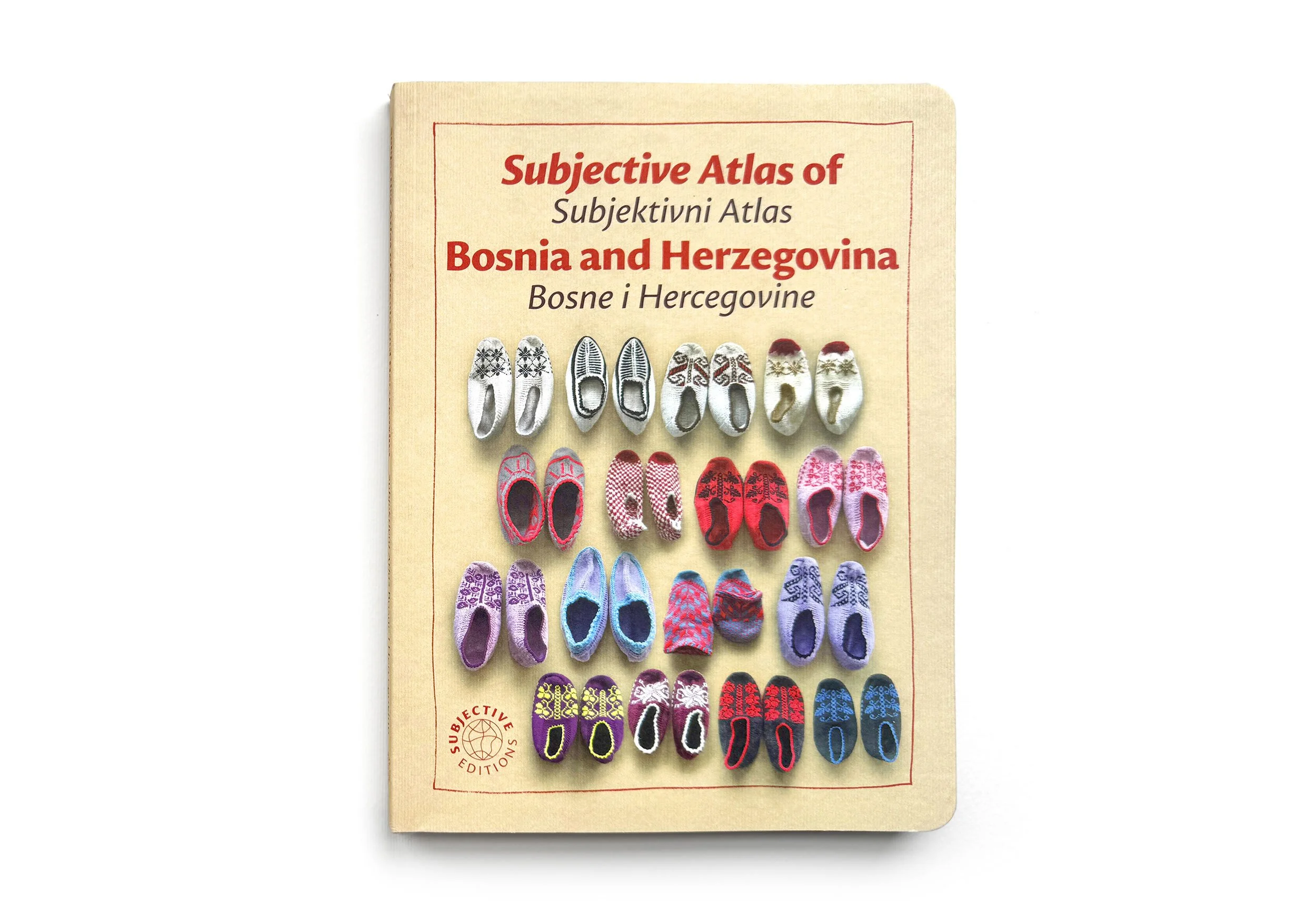
PCRC & Subjective Editions, 2025
Bosnian-English, 192 full-colour pages, 16.5 x 22 cm
—
The Subjective Atlas of Bosnia and Herzegovina brings together over eighty personal mappings from people living in a country long defined by outsiders—reduced to entities, ethnic categories, and wartime narratives. This atlas counters such simplifications with a polyphonic cartography: visual stories that show how people inhabit, remember, and imagine this place today.
Created through participatory workshops across Bosnia and Herzegovina, the contributions use drawing, collage, and photography to create alternative mappings of a conflict affected state. Rather than offering a fixed or objective account, these situated mappings aim to feel the country—through the materialities of war-damaged buildings, the taste of homemade juices, and the joy of small acts of kindness.
In a landscape where trauma lingers and political inertia persists, this publication opens space for critical imagination. It invites us to see Bosnia and Herzegovina not as divided, but as a layered place of entangled histories and resilient futures—mapped from within.
—
ISBN 978-9-46444-802-3
This publication is a result of a collaboration between Subjective Editions, Newcastle University and PCRC
Editor-in-Chief: Annelys de Vet (Subjective Editions)
Editorial support: Sana Gobbeh, Anita Karabašić, Paul Lowe, Tatjana Milovanović, Ivana Perić, Theresa Rauch, James Riding, Velma Šarić, Amina Sejfić
Foreword: Velma Šarić
Introduction: James Riding

PCRC & Subjective Editions, 2025
Bosnian-English, 192 full-colour pages, 25,5 MB
—
The Subjective Atlas of Bosnia and Herzegovina brings together over eighty personal mappings from people living in a country long defined by outsiders—reduced to entities, ethnic categories, and wartime narratives. This atlas counters such simplifications with a polyphonic cartography: visual stories that show how people inhabit, remember, and imagine this place today.
Created through participatory workshops across Bosnia and Herzegovina, the contributions use drawing, collage, and photography to create alternative mappings of a conflict affected state. Rather than offering a fixed or objective account, these situated mappings aim to feel the country—through the materialities of war-damaged buildings, the taste of homemade juices, and the joy of small acts of kindness.
In a landscape where trauma lingers and political inertia persists, this publication opens space for critical imagination. It invites us to see Bosnia and Herzegovina not as divided, but as a layered place of entangled histories and resilient futures—mapped from within.
—
ISBN 978-9-46444-802-3
This publication is a result of a collaboration between Subjective Editions, Newcastle University and PCRC
Editor-in-Chief: Annelys de Vet (Subjective Editions)
Editorial support: Sana Gobbeh, Anita Karabašić, Paul Lowe, Tatjana Milovanović, Ivana Perić, Theresa Rauch, James Riding, Velma Šarić, Amina Sejfić
Foreword: Velma Šarić
Introduction: James Riding
Events


Workshops


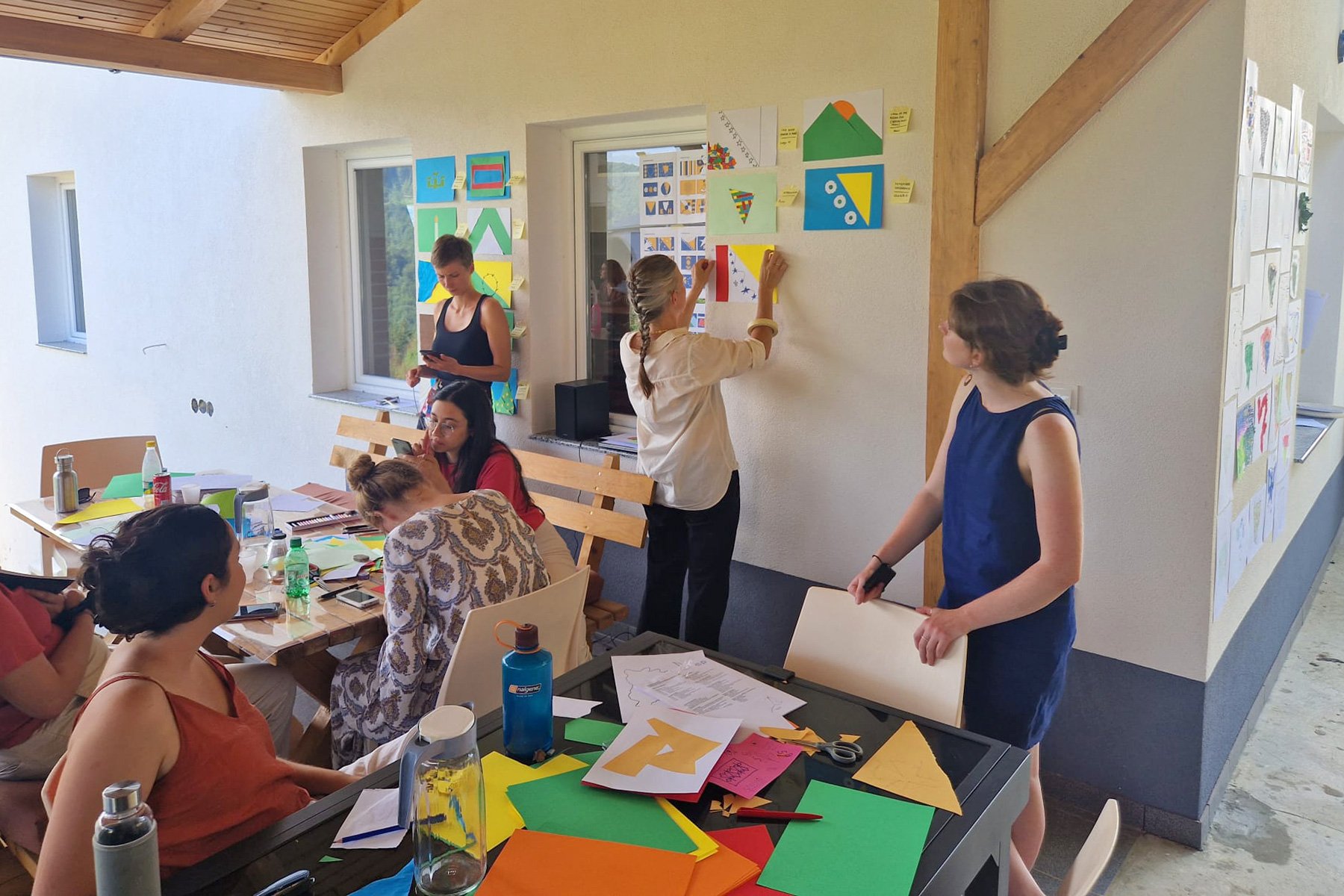

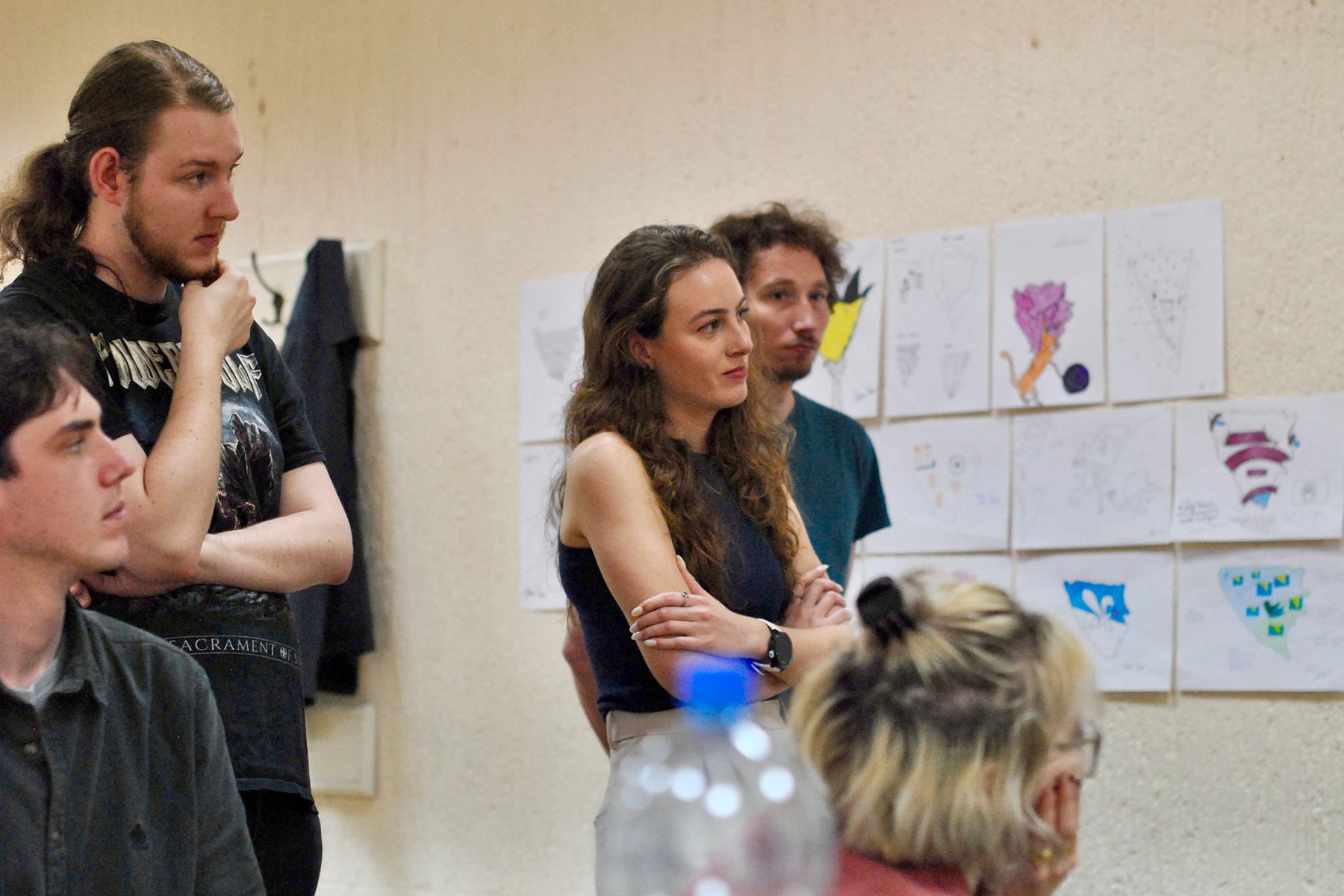


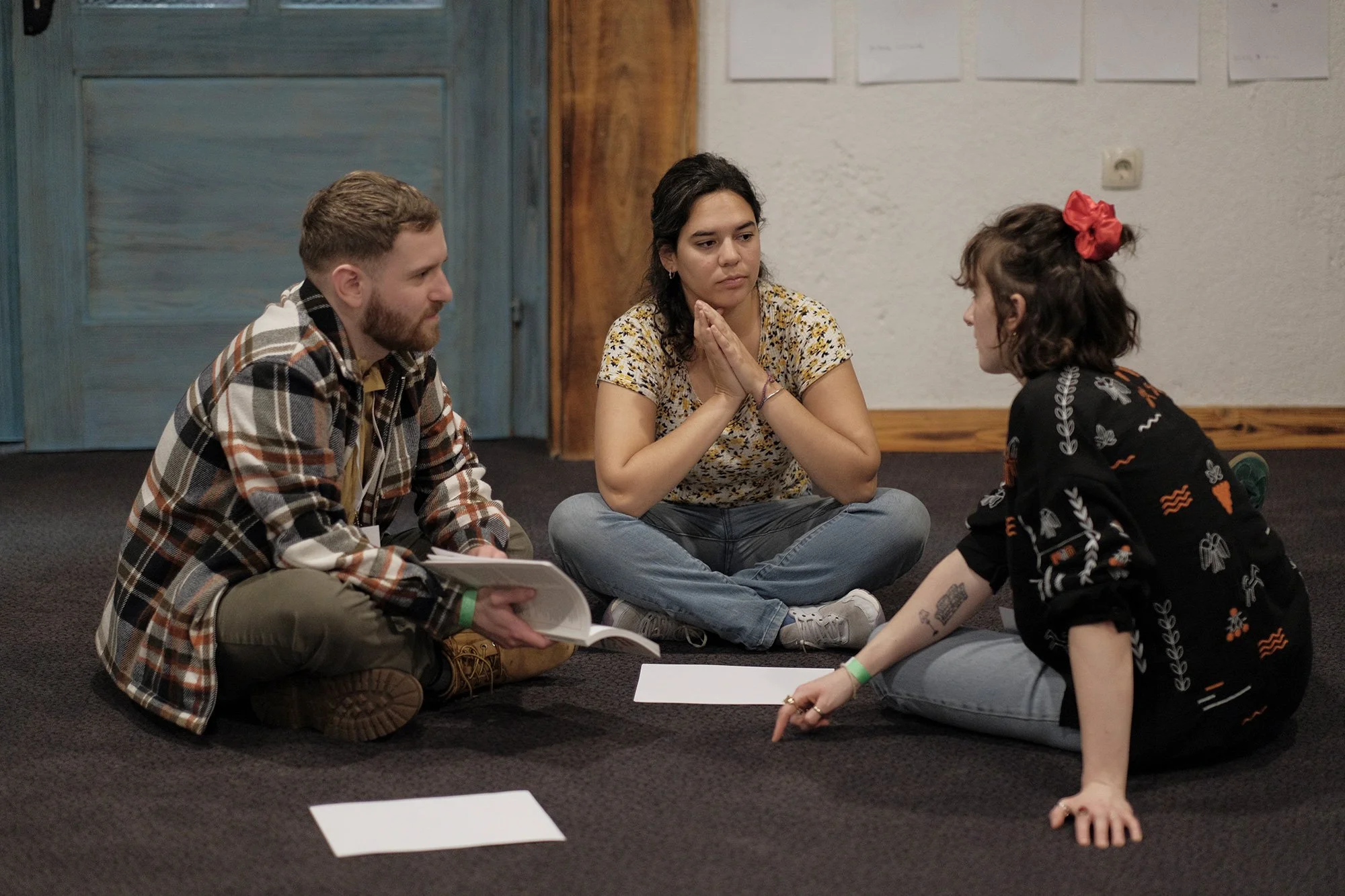
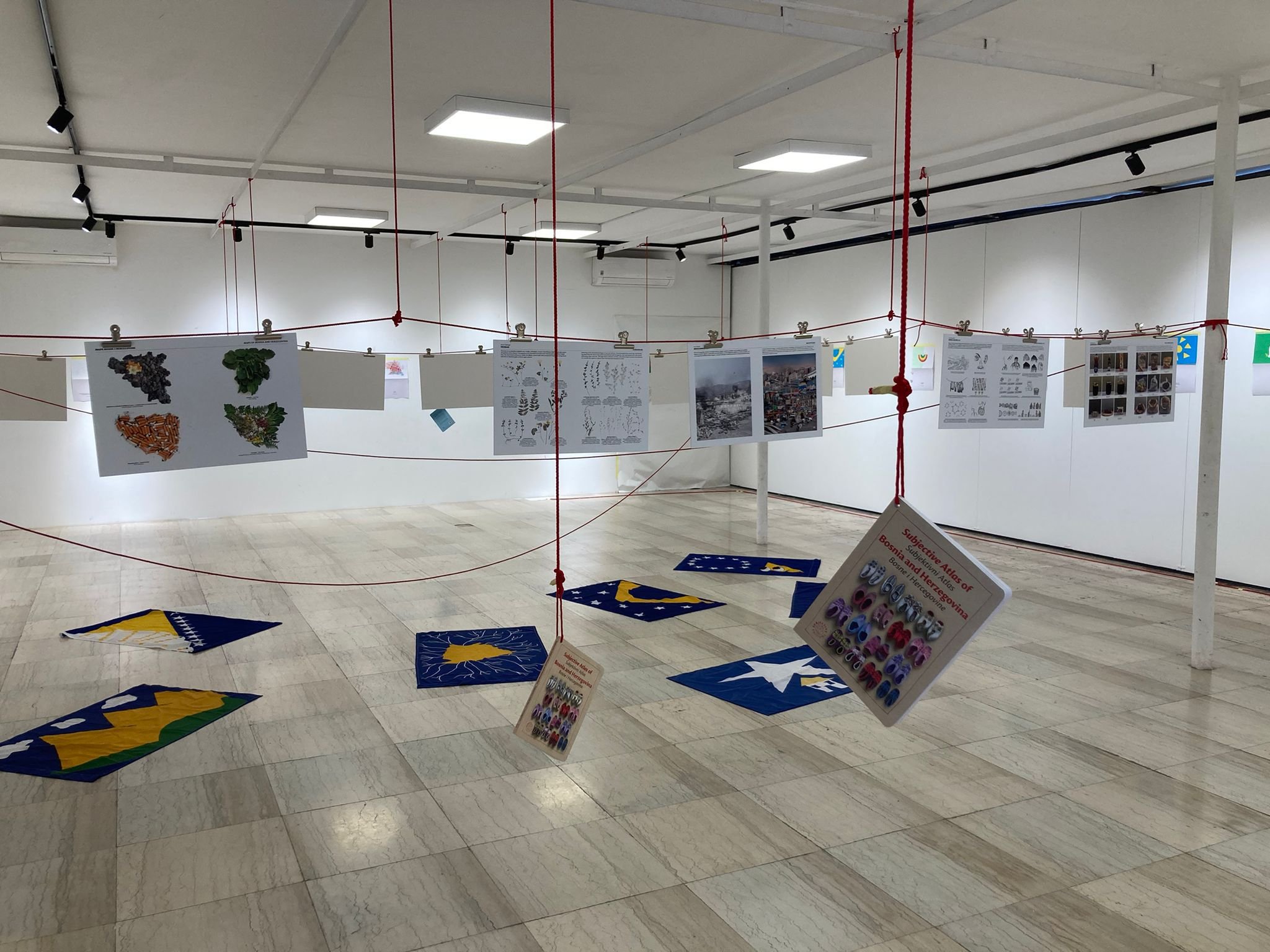
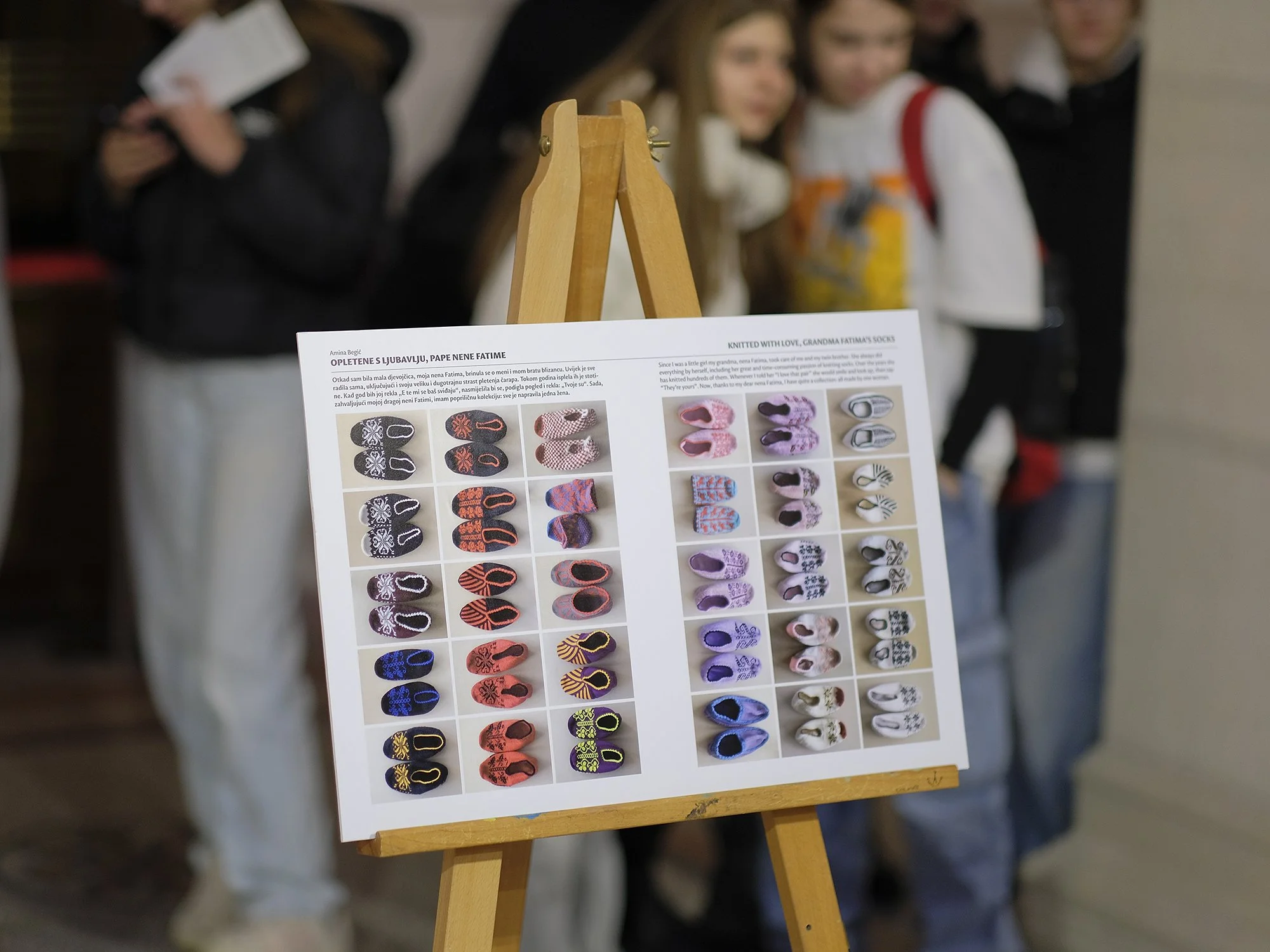
The Subjective Atlas of Bosnia and Herzegovina was initiated by human geographer Dr. James Riding, who has conducted extensive research in the Western Balkans. Confronted with the limitations of academic research, he saw the Subjective Atlas methodology as an opportunity to map the region from within by its inhabitants. In collaboration with the PCRC, Subjective Editions facilitated three workshops in Sarajevo ( May 2023), Srebrenica (July 2023), and Vitez (February 2024) , engaging over 80 participants. Their perspectives formed the basis of the atlas, with additional mappings contributed by a broader network of artists and photographers. Subjective Editions designed the atlas in close collaboration with the map-makers, ensuring accurate representations. Photography: PCRC
Booklaunch, Sarajevo
Testimonials
“Creative approaches have the power to serve as a pathway for peacebuilding. Imaginative content such as this atlas is built in order to propel dialogue, transform public opinion, elevate underrepresented voices, and inspire hope, intercultural understanding, and cooperation among people living in post-conflict and divided societies. By combining such novel visual storytelling with historical dialogue and memory, witnessing, and intercultural cooperation, PCRC [Post Conflict Research Center] aims to produce and promote programmes, content, and works that represent or advocate acts of justice.”
— Velma Šarić, founder and president of the Post-Conflict Research Center
“A focus on the subjective is perhaps uniquely appropriate in a place where the voices of those who experienced war and its aftermath, the traumatic, environmental, and material legacies of conflict, are often missing from reports and studies. We hope the following pages, created by many, provide a unique representation of Bosnia and Herzegovina that all those who call Bosnia and Herzegovina home, can find a little bit of their home in.”
— James Riding, geographer and initiator of this Subjective Atlas of Bosnia and Herzegovina
“I would like to say how much I enjoyed working on this project. I love being creative, and sometimes you just need to process heavy topics through art. I often think about those days when we were drawing and cutting paper.”
— Amila Čandić, participant
“With every page, I discover aspects of Bosnia that I (and I imagine many others) tend to overlook in daily life. Yet when I see them laid out so thoughtfully, my first reaction is, “Oh yes, I’ve never noticed that, but it’s so Bosnian!” It will leave a lasting impression on everyone involved—and many beyond. “
— Melisa Sinic, participant
“Today, the city hall once again becomes a symbol of meeting, dialogue and common reflection. We are proud that Sarajevo has the honor of hosting young authors whose works show the power of creativity and hope for the future of Bosnia and Herzegovina. Their drawings, maps, and photographs remind us that peace is not only the absence of conflict, but also a space that we must constantly build anew”
— Samir Avdić, Mayor of Sarajevo 🔗
“The Subjective Atlas team has put careful consideration into the methodology of using artistic practices to “counter-map” a complex post-conflict context, and the participants were eager to publish their expressions. “I would recommend this training to anyone,” said Zerina Sirćo, an international relations and diplomacy student from Visoko. For Adna Jeleč, a social work student from Sarajevo, the workshop provided “a new opportunity to express [her] opinion based on [her] experience and [her] knowledge” – a subjectivity the project’s team intentionally seeks out. The Subjective Atlas team, in turn, appreciated the workshop in Sarajevo as “a crash course into history, culture, life, social fabric, administration, language, sayings, habits, food…” – setting them off on their venture to produce an atlas of Bosnia and Herzegovina. […] The workshop has clearly left an impression on local youth, who can use this activity to develop their artistic and journalistic skills. Their stories will undoubtedly contain insightful testimonies of their relationship to a country that grew throughout their lifetimes, without excluding lighthearted representations of Bosnian identity too. Thus, one can expect deeply personal, cartographic representations of the community from the Subjective Atlas of BiH, alongside images and stories of warm servings of burek and Bosnian coffee.”
— Annabelle Werner, Theresa Rauch 🔗(Balkan Diskurs, 6 July 2023)
— Video report by Serbian television station 🔗 Perspectiva
Acknowledgements
This publication is a result of a collaboration between Subjective Editions, Newcastle University and PCRC (December, 2025)
Editor-in-Chief: Annelys de Vet (Subjective Editions) Editorial support: Sana Gobbeh, Anita Karabašić, Paul Lowe, Tatjana Milovanović, Ivana Perić, Theresa Rauch, James Riding, Velma Šarić, Amina Sejfić Foreword : Velma Šarić Introduction: James Riding Graphic Design: Annelys de Vet, assisted by Lydia Tekatoglou and all contributors
Contributors: Emina Alilović, Dženita Arapović, Nedžada Avdić, Monela Bajramović, Dželil Bandić, Amina Bašić, Amela Bećić, Ema Beganović, Amina Begić, Džemal Begić, Emma Bloodgood, Džana Borović, Mirza Bradavić, Amila Čandić, Harun Čandić, Selma Ćatović Hughe, Mirza Čengić, Lejla Ćirić, Andrew Cotter, Ammar Ćuk, Annelys de Vet, Federica Di Rocco, Anela Dumonjić, Lucía Cristina Duran Garcia Bedoya, Iman Duvnjaković, Lamija Fatić, Dženeta Fazlić, Ziyah Gafic, Yana Ghazi, Lamija Hakalović, Mark Hamer, Lejla Himzić, Aleksandar Holliday, Jasmina Horić, Emir Isaković, Rimantė Jaugaitė, Adna Jeleč, Lejla Joldić, Haris Kahriman, Anita Karabašić, Nina Kaufmann, Isabelle Kokona-Dussau, Naida Kovač, Nejra Kravić, Matija Krivošić, Amila Kurtalić, Đuldina Kurtović, Luana Lima Teixeira, Janny Lücker, Rudy J. Luijters, Maja Lukić, Gabriella Lundy, Amina Mahmić, Adis Manhosevic, Mladan Miljanović, Andrea Milojević, Dennis Miskić, Harun Mulić, Rijad Muminović, Merjem Muratović, Juan Ortiz, Jelena Ostoich, Mila Panić, Stefan Pljevaljičić, Theresa Rauch, Anna Richter, James Riding, Amina Šehović, Neira Šijak, Mitar Simikić, Melisa Sinić, Saida Skopal, Igor Sovilj, Sandy Steele, Dalija Subašić, Saša Tatić, Miriam Vanek, Nevena Vidović, Franziska von Wendorff, Annabelle Werner, Neori Yasumaru, Zerina Zec, Enes Žuljević
Support The project was made possible through a NUAcT Fellowship held by Riding at Newcastle University, with additional funding obtained through an ISRF small group grant, an ESRC IAA grant, an RGS-IBG small group grant, and an ISPF ODA grant.
Publisher: Subjective Editions (Annelys de Vet, Kurt Vanbelleghem) Distribution: www.ideabooks.nl